
AvideTravel
All travel guides

Avide After Dark — Lifestyle Resorts

How Resort Design Shapes Your Evening Mood: Lighting, Music and Space

The same pool deck feels entirely different at 2 p.m. and 10 p.m. Here's how adults-only resorts use design elements to create distinct evening atmospheres—and how to choose the vibe that matches your trip.

Updated September 27, 2026 Questions and comments
How Resort Design Shapes Your Evening Mood: Lighting, Music and Space
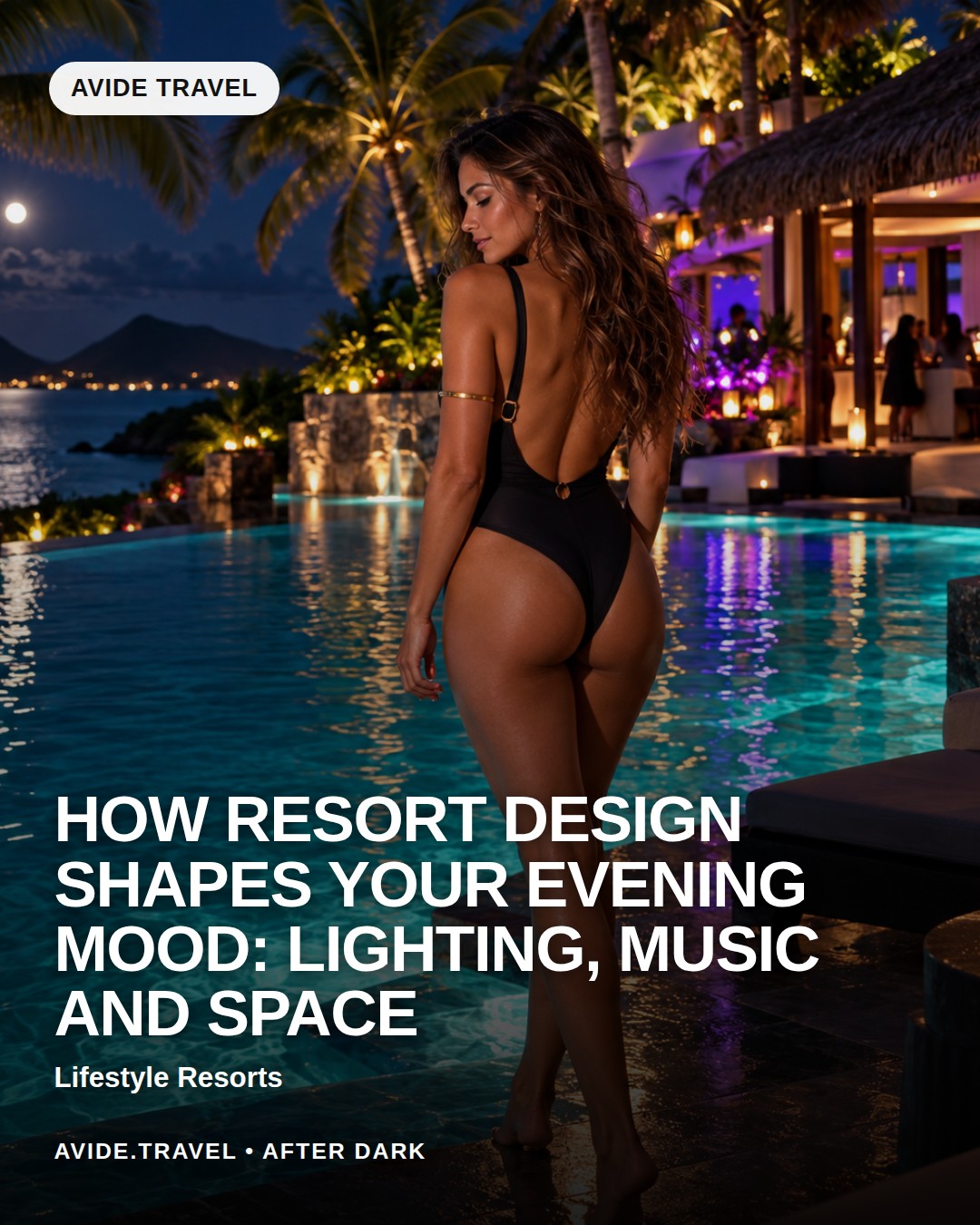
Walk across a resort's central plaza at noon, then again after sunset. The architecture hasn't moved, yet everything feels altered. That transformation is intentional, and understanding how adults-only resorts orchestrate it helps you book the right property for your evening temperament. **Lighting as Architecture** Daylight flatters every resort equally. After dark, lighting design separates properties that understand atmosphere from those that simply flip a switch. Some adults-only resorts favor warm amber washes that soften edges and encourage lingering conversation. Others deploy pinpoint accent lighting—illuminating pathways while leaving surrounding areas in shadow, creating intimacy through subtraction. A few properties embrace theatrical approaches: color-changing installations, fire features, or moonlight-mimicking pools. The practical question for travelers: does the lighting invite participation or observation? Bright, even illumination suits guests who want to socialize actively. Dimmer, more fragmented schemes reward couples seeking contained moments. Resort photos rarely capture this accurately; guest videos taken after dark reveal far more. **Music's Temporal Geography** Sound design operates across both space and time. Sophisticated adults-only properties rarely broadcast identical playlists property-wide. Instead, they map sonic zones that shift through the evening. Early cocktail hours might feature live acoustic sets near the lobby bar—audible enough to attract, quiet enough for conversation. As night progresses, tempo and volume migrate toward dedicated entertainment areas, leaving dining spaces and accommodation wings progressively more sheltered. The best-designed resorts make these transitions feel organic rather than enforced. For first-timers, this matters practically. If you retire early, verify whether your room category sits within or beyond the evening sound radius. Properties with thoughtful acoustic design cost no more to build but significantly improve sleep quality for guests not pursuing late nights. **Layout and Circulation Patterns** How spaces connect determines how energy flows. Resorts with single central gathering points create unavoidable community—everyone shares the same evening focal point. Properties with distributed nodes permit more selective engagement: a quiet corner here, livelier terrace there, secluded seating elsewhere. Path width matters unexpectedly. Broad, direct routes encourage movement and mingling. Narrower, winding approaches slow pace and reduce encounter frequency. Neither is superior; they serve different vacation intentions. Some adults-only resorts deliberately design "discovery moments"—seating alcoves, unexpected viewpoints, small bars revealed only through exploration. These reward curious guests without obliging participation-averse visitors to navigate unwanted social territory. **Reading Between the Marketing Lines** Resort descriptions use coded language. "Vibrant evening programming" suggests centralized, high-energy design. "Intimate hideaways" indicates dispersed, lower-key planning. "Sophisticated nightlife" often means curated music and lighting; "lively entertainment" frequently translates to volume and activity. Without verified specifics for individual properties, the general principle holds: design choices communicate intent more reliably than adjectives. Search guest-contributed imagery showing actual evening conditions. Time-stamped photos reveal whether a property's after-dark reality aligns with its promotional promise. **Choosing Your Match** There's no universal best evening atmosphere—only better fits for particular trips. Anniversary celebrations, friend-group reunions, solo decompressions, and first-time lifestyle-curious travel each benefit from different design approaches. The sophisticated traveler recognizes that resort selection extends beyond room categories and dining options. The invisible infrastructure of evening experience—how light falls, where sound travels, what paths invite—shapes memory as profoundly as any visible amenity.

Questions and comments

Ask about this destination or share your travel experience.

Comments

Leave a comment

You must be signed in to leave a comment.

Loading comments...